Novella, 16,800 words (horror, campy)
My Dead Brother’s GPS Keeps Taking Me to the Wrong Address
Jake Swan
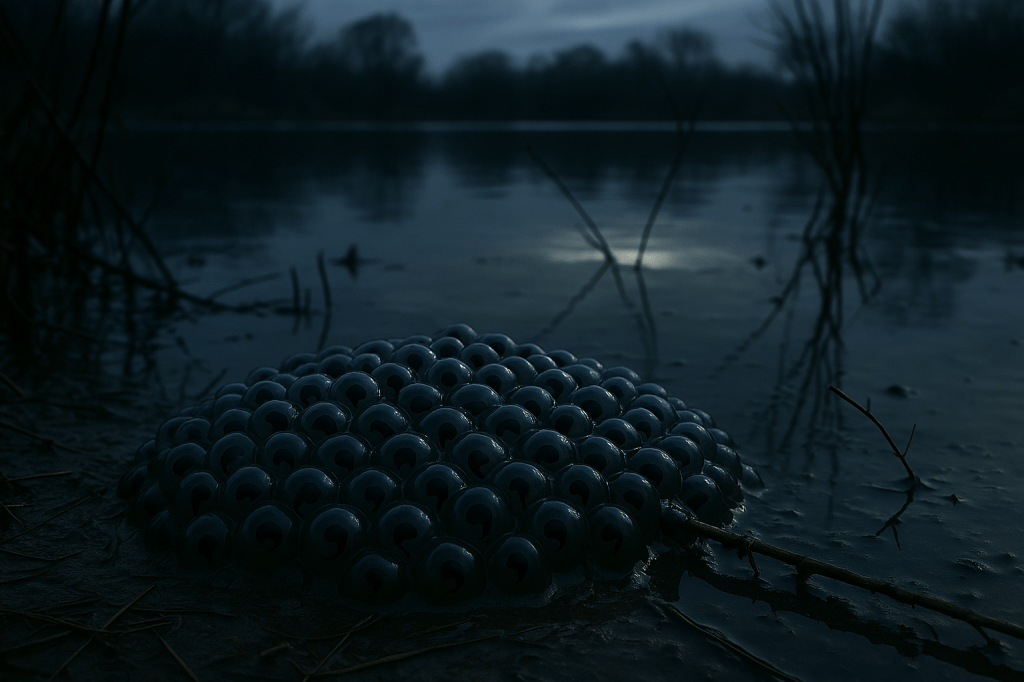
My name is Jack McAlester.
My brother, Max, was ten years older than me.
Growing up, Max and I didn’t have a lot in common. He was already in high school by the time I was in kindergarten, and when I started playing basketball, getting into video games, and generally doing the things a big brother might be interested in, he was living on his own, four hours away, in Boston.
I looked up to Max in awe, but when I was a kid, our relationship was a little more like an uncle and a nephew than two brothers. I suppose one might chalk this up to our age difference.
After he left for college, I would only get to see him on long weekends and holidays. Sometimes he would arrive home with a duffel bag full of laundry for Mom to do. But he was always busy, catching up with his buddies, and going out to parties, and other than a quick dinner or an early breakfast, I didn’t see him a lot.
Max was smart. He was accepted into MIT, but didn’t get a big enough scholarship. So he ended up going to U. Mass and studying computer engineering.
He finished at the top of his class and was headhunted by some serious big names, including our own federal government — the Department of Transportation wanted him to develop a variable speed limit system that would automatically change with weather conditions. Dad encouraged him to take it, since it was a government job, with a pension and benefits, but Max was still too young and adventurous. He ended up working as a game designer at a startup run by one of his professors, for a measly salary but quite a generous stock option program.
We started seeing a little more of him after graduation. He’d met a girl in his last year of engineering and they’d hit it off. They would visit, together, and when they did, Max would opt to stay home and watch movies, and hang out with us (and his girlfriend) instead of going out with his old pals.
He was smitten.
Jane, a knockout gorgeous Vietnamese-American woman, was a few years older than him. When we first met her, she was finishing her post-doctorate in bioengineering and computer modelling.
She was some kind of super-genius. Her thesis was based on using bio-electric deep-brain stimulators made of strands of amphibian stem cells, implanted in the brains of pituitary-insufficient rats to induce ovulation.
It sounded like Victor Frankenstein stuff, to be honest, but Jane was the polar opposite of the archetypal mad scientist. She was socially astute, had a wonderful laugh, and carried herself with unfathomable grace.
We loved her.
Unlike my brother, when she finished school, she actually did end up working for the government.
Specifically, she was with the Department of Homeland Security.
She couldn’t tell us the details of her assignment, but from what I understood, her job was to design some kind of social media scraper that could find faces in the background of people’s Facebook pictures and match them to missing persons, or fugitives, or terrorists, or, I suppose, anyone the Department of Homeland Security happened to be looking for.
I basically thought she was a cop. And that meant, as a kid who loved police movies, I thought she was cooler than hell.
Every time they came to visit, Jane would fawn over me, making a big deal out of telling me how tall I was getting. She would pull me into an embrace and marvel at how handsome I’d become.
I had a huge crush on her, which of course was an innocent, kid-type of thing, but I vowed that someday I would find a woman just like her to be my own girlfriend.
My mom and dad adored her, and tried to convince she and Max to move back to Bangor, where we lived, so they could get married and start a family of their own, but Max wouldn’t hear any of it.
There was nothing wrong with our home life, and Bangor, while quiet, is a beautiful place to live, but Max loved his job in Boston, and couldn’t imagine leaving. This was before the pandemic, of course, when working remotely became normalized.
There were rumours that Max’s developer might be bought up by EA, and my brother wanted to be the first to arrive and the last to leave every day to make sure his name wouldn’t be on the “layoff” list if his team were absorbed by a bigger fish. Since he was holding onto so much company stock, a takeover could potentially make him rich. He saw it as his big chance.
Mom was convinced that living in Boston was too dangerous.
“The homicide rate has doubled in the last five years!” I remember her saying one Thanksgiving, “It’s no place for a young family!”
Jane and Max rolled their eyes and assured her they would be fine.
I believe they considered Mom to be a little quaint in her approach to the world. I don’t think they resented her. I imagine they were old enough to understand that she had her idiosyncrasies, but they decided to laugh about those things in private.
They were mature for their age. I realize that, looking back on it now. They were a lovely couple.
The years went by, and I got caught up in my own life — first basketball, and then, after blowing out my knee, Physics, Chemistry, Biology, guitar, school musicals, and the unsuccessful pursuit of girls.
Max’s company was awarded a big contract for a triple-A title and for a while, he had to stop visiting so he could work on the weekends. I didn’t take it personally but after around six months without seeing him, I realized we might be drifting apart.
It bothered me. I worried that I wasn’t interesting to him, or that I fell somehow short of being a good brother. On top of that, I missed Jane, whom I’d begun to think of as a member of the family.
The first pandemic year, when everyone was locked down, Max gave me an iPhone for Christmas so we could FaceTime. To my surprise, he called me just about every night.
As it turned out, we hadn’t drifted apart at all. In fact, we got along great!
We had the same sense of humour, which, I suppose we got from Dad.
Until then, I’d only known my brother in the context of my mom and dad and brother all being in the same house at the same time.
But with just the two of us hanging out on FaceTime, it was like getting to know him all over again. I was given a window into his real life, and he quickly became my role model.
Max loved to tell stories, and he could spin a yarn around just about any event — whether it was an encounter with a weirdo on the subway, or his misadventures in attempting to install a bidet — it could be just about anything. He kept me in stitches.
And he loved hearing about my life, as boring as it was. He was a great listener.
Until then, I knew on a basic family-dynamics level that I had a brother. But during that magical year, I grew to really love him. I think he loved me too. Actually, I know he did. He told me so — but that was later.
By 2023, things seemed to be going gangbusters in Boston.
Max loved his work. He’d been promoted to team-lead on a new third-person adventure game.
Jane had been headhunted by a private biotech startup that was more in line with her academic background, and between them, they doubled their income. They were considering moving out of their Boston apartment and into a house in the suburbs, which I was certain would make Mom happy.
On top of all that, they decided to get married, and Max wanted me to be his best man.
All this happened in the spring of my Grade Eleven year.
At sixteen years old, and having had exactly one vacation out of Maine, I was starting to feel a little cooped up. I’d never been to Boston to visit Max and Jane, and I decided that it was something I would have to do. The problem was, I didn’t have the nerve to come right out and ask. What I needed to do, by my teenage logic, was find an excuse that would lead me there, and then let the invitation be Max’s or Jane’s idea.
Browsing the internet one evening, I discovered a summer program at Harvard University, where high-school students could come to attend lectures, participate in labs, and write tests and essays.
It seemed too good to be true.
I realize the idea of doing more school on summer break sounds incredibly nerdy, but I actually loved school, and badly wanted to go to an Ivy League college.
My basketball career cut short, I threw all my competitive energy into academics. Valedictorian was within reach, though thanks to a setback in Computer Ed, of all places, I was now fourth out of the five hundred students in my year. I planned to catch the lead in my senior year.
Mom and dad had nowhere near enough money for an Ivy League tuition, but in the back of my mind, I hoped that if I went to the Harvard summer program and poured my heart and soul into the course, it might help me get a scholarship.
Thinking myself to be the perfectly sly devil, I casually brought this up with Max on one of our calls. He took the bait. “You have to stay with us!” he said. “You’ll love it! Boston is amazing. We’ll catch a Sox game!”
My mom took more convincing. The national headlines had been covering a story about missing graduate students, not from Harvard, mind you, but from U. Mass and MIT, and the idea of me going for two weeks had her practically pulling her hair out in worry.
Dad, ultimately, came to my rescue. “He’ll be staying with his brother!” he said. “Max is as tough as woodpecker lips. Jack will be fine!”
Under the onslaught of pressure from the three of us — that is, Max, Dad and I, she eventually relented.
Three weeks before I was supposed to go, my brother broke my heart for the first time.
It had been over a week since he FaceTimed, which was unusual. The last time we talked, Max had been quiet and contemplative.
This time, when he called, I nearly recoiled at the site of him. His face was ghastly grey. His hair, stringy and greasy.
Puffy black circles hung from his pink eyes.
He looked as though he hadn’t slept in weeks.
“Dude, are you OK?” I asked.
My brother seemed to be on the verge of tears. “I’m fine,” he said, “but we’re going to have to change our plans.”
He told me that his office needed him to go to Europe for a few weeks. It was some kind of emergency with their development team and an upcoming release deadline for their big title.
I was disappointed but I understood.
Then came the heartbreak.
“Can I stay at your place, still? With Jane?”
“I’m sorry man,” he said. “I don’t think that’s a good idea.”
“But what do I do?”
I was so stupidly selfish.
“I booked you at the Marriott right next to North Station. It’s on me, buddy.”
“Jane really doesn’t want me there?”
“It’s complicated,” he said; “she’s going through some stuff.”
The way he said it, combined with his bedraggled appearance, filled me with dread.
He and Jane were the most solid couple I’d ever known, save for mom and dad. She was family.
“Are you guys —”
He cut me off. “I love you, Jack. I’m sure Jane does too. It’s just a bad time. I’m trying to figure it all out.”
I felt my lower lip start to pout. I was way too old to cry. Like a decade too old! But I felt the tears welling up anyway.
I had wanted to be there with them so badly — we had grown so close. The rug was being pulled out.
Max, to his credit, pretended not to notice.
“We’ll talk soon, OK?”
“OK.”
We never spoke again.
Days went by. Then a week. Then two. Max never called. He didn’t answer his cell phone.
We thought maybe it had something to do with Europe. But we couldn’t get ahold of Jane either. Then, instead of our calls going to voicemail, her phone number came back with a “not in service” message.
Mom and Dad freaked out.
At first the police didn’t want to get involved, since Max was supposed to be in Europe, but when we called Max’s boss, Karl, he told us that my brother hadn’t been into the office in weeks. Dad asked him about Europe.
“We don’t have a branch in Europe,” he said; “that doesn’t make any sense.”
I told my parents about our last FaceTime, and how he’d looked so bad, and how he’d cancelled my visit.
I think that’s when Mom and Dad realized something was truly, very wrong.
It was Jane. The fact that he’d said I couldn’t stay with her. That she was “going through some things.”
Max had loved her so deeply, we all knew that if she broke it off with him, he would be devastated.
I know Mom and Dad were thinking suicide, though they never said it out.
Dad drove to Boston, and parked himself in the police station, insisting they do a welfare check and refusing to leave before they agreed.
When they finally drove to Max’s apartment and had the landlord unlock the door, Dad said the apartment smelled awful, and both he and the officer thought they were about to walk in on a decomposing body, only what they found was some rotting food in the fridge, a pile of uncollected mail in the mailbox, and no sign of Max or Jane.
“The stench, Jack,” he said. “I’ve smelled rotting food. This was so much worse. It was — well — disgusting.”
I obviously cancelled the trip to Harvard, in the end. Finding Max and Jane became my only focus. I quit my summer job at Blackbeard’s Cove Mini Putt, and joined Mom and Dad every day in the search.
We spent three weeks putting up flyers around Boston, trying to get media coverage and doing all the things you never think you’ll have to do when the unimaginable happens.
I remember spending that time in a constant state of disbelief and dread. This wasn’t a thing that happened to people like us. It was a thing that happened to strangers, you never met. The ones you saw on Forensic Files.
I’d wanted so desperately to see the big city, but not like this. Every time I took a break to grab a snack, this hot bubble of acidic guilt would roil through my guts. The place was too big. There was no way to canvas it all. My taking a break only made things feel more hopeless.
I remember wondering how much pain and stress the human heart could take before it simply gave up and stopped beating.
Dad fell apart first.
In a way, I think that’s how I was able to get through it. He gave me something other than Max to focus on.
We’d driven home to Maine after having no luck whatsoever in Massachusetts.
The morning after we arrived home, I found Dad in his office, crying over a box of things the police had given him back from Max’s apartment. The thing stunk to high heaven. The box or its contents smelled like rotting fish and sewage, but somehow worse. The smell made you want to gag. I remember thinking that it smelled like death.
My father wept into it as though it were an open casket.
The box had our old family photo album, predominantly featuring pictures of Max growing up. Our parents must have given it to him when he moved out.
Dad just sat there, eyes wide and unbelieving, staring at the thing. I asked if he was OK and he didn’t respond.
I thought of the phrase “Cracking up.”
I thought my dad was doing just that.
Mom managed better. She was tougher than my father, as it turned out.
When there’s a family catastrophe, you learn a lot of new things about your loved ones. I learned that my mom is tough.
Whenever she could convince a local network to carry Max’s story, she was the one who gave interviews, while Dad sat quietly by her side, his face long, solemn, and to my horror, very old.
Over a month after he went missing, they found my brother’s body in the Groton Reservoir in Connecticut.
He’d been in the water for at least a few weeks, and the gasses released during decomposition had finally floated his remains to the surface. He was found by a couple who were hiking with their golden retriever.
What he was doing in Connecticut was anyone’s guess.
My parents had to go identify the body and I stayed home. The next night, dad got drunk in his office, sitting over that reeking box of memories. I asked again if he was OK.
“It wasn’t him,” Dad said, his voice thick with booze and choked with tears, “it wasn’t my boy. Sure it was his clothes — his wallet — but that wasn’t Max. That thing was — it was corrupt, Jackie. Not decomposed but corrupt. Does that make sense?”
I nodded, not wanting to imagine it.
“And something — something had been at it.”
He closed his eyes and took a long pull of scotch, straight from the bottle.
Later that night, when I was lying in my bed, trying to cry silently, I heard my dad being sick.
What was happening to us?
That feeling hit all over again. How could this be real? How could our loving, happy family be so thoroughly destroyed? How could Max be dead? How could he be gone forever?
There’s a term they use for a man who kills his wife and kids. They call him “A family annihilator.”
Now I knew other things could annihilate a family. Events could do it. Circumstances.
I was mad at God for doing this to us. I thought of God as a family annihilator.
I hated what was happening to my dad. He’d stopped eating. He wasn’t working. He spent all day, every day in his office with that horrible, stinking box. He sat there in the miasma of death, drinking and staring, drinking and staring, drinking more and staring more.
He took breaks only to go to the washroom and to be sick. Then he got right back to it.
If I went out for groceries, or went with Mom to the funeral home, as soon as we came home, the putrid smell of that terrible box would wallop us in the face.
People would come to visit and would breathe into their sleeves before making their excuses.
Finally, the day before the funeral, it got the better of me. I gently knocked on Dad’s office door.
He was sitting in his chair, as always, a tumbler of liquor in his hand. The photo album was spread out on the desk. Pictures of Max as a kid, pictures of Max at his graduation, pictures of Max and Jane sitting beside a Christmas tree.
“Dad,” I said, “I know you loved him. We all did.”
“Uh huh,” he said, his voice sloppy as though his tongue were swollen.
He knew what was coming.
“His stuff — this box — it stinks. It’s smelling up the house. I don’t know how it could be possible, scientifically, for it to still reek this much, but it’s awful. You have to take it to the garage.”
He didn’t say a word. He picked up the box and took it downstairs.
I heard the door to the garage creak open and then close.
My mom stood in the hallway. “Thank you,” she mouthed.
Dad stayed in the garage. Mom made spaghetti for dinner but he wouldn’t come in. He sat in his car, staring at the photo album in the dim light of the bare 40-watt bulb that hung over our stack of firewood.
My senior year was supposed to start in a week, and I was wondering how in the hell I was going to manage school on top of all our family problems and my own sorrow, and for some reason, I got mad. I was mad at my father. He was supposed to be the dependable one in our family. I decided that he was in dereliction of duty — that he was being selfish.
I stood up from the dinner table and stormed into the garage, then yanked the car’s door handle so hard I thought it would rip off its hinges.
“You have to stop!”
I didn’t say it. I screamed it.
“You have to be here for Mom and me. You can’t fall apart like this! The funeral is tomorrow. Pull yourself together and act like a man!”
My dad put his hands to his head. “I’m afraid,” he said, his voice trembling, “I’m so afraid I’ll forget what he looked like.”
I’ve never felt so ashamed of myself.
“I’m sorry,” I said, and I embraced him while he cried.
Jane didn’t come to the funeral. We didn’t know if she was even aware that Max had died. Mom and dad had a number for her parents in California, but that line too, had been disconnected.
None of us found much closure in the funeral or the visitation. The pathologist had ruled my brother’s death as an accidental drowning, but there was no reason for him to be at that reservoir, hundreds of miles south of his home, so we continued to suspect it had been a suicide, but we would never have any way of knowing, and that was difficult to accept.
They’d found his car parked on the side of an unused logging road a few miles away. In it, there was a copy of his will. Apparently he’d updated it a few months before he went missing. He left everything to Jane, Mom and Dad, except for his 2002 Honda Accord, which he left to me.
The lawyer struck out when trying to contact Jane, so that part of the will ended up in probate.
Mom and dad, though, got a third of Max’s shares in the company, as well as options, and ended up with over a million dollars.
We started worrying about Jane — at first we all assumed they’d broken up, but as more time passed without any contact, our concern only grew. Max would never hurt her — of course he wouldn’t — but if he had — if he’d hurt her in a moment of blind rage — would he have taken his own life? Was Jane in that reservoir too?
Family annihilator.
The state troopers assured us that they’d swept the entire lake and had found no trace of another body.
That brought us back, full circle, to our initial assumptions — she and Max had broken up, and he had gone for a long drive. When he saw the reservoir from the I95, he must have had the idea to pull off the road.
Maybe Jane had moved back in with her parents, who, in turn, might have moved. Certainly the California exodus was a real phenomenon at the time.
Maybe she had gone to Vietnam to be with her ailing grandmother. That would explain her cancelled cell phone.
But without hearing from her we were left with some very big “what-ifs.”
Had they been abducted? Had there been foul play?
The medical examiner didn’t think so. He thought Max had fallen in, possibly bumped his head, and drowned. Of course — there was only so much he could say for certain, given the state of the remains.
He didn’t say it in so many words, but it sounded like Max’s body was incomplete. I read the report, which described “Significant animal activity.”
The thing about the drowning theory was that Max could swim. He spent a few summers as a lifeguard when he was younger.
So maybe it was an accident. Maybe he was hiking and he fell and hit his head.
I hoped that was the case.
But I didn’t want to know for sure. Because I thought, in my heart of hearts, that I already did.
My brother didn’t do social media. There was no Facebook page, no Twitter (or X as they call it now), no Instagram and no LinkedIn. If there had been, I could have printed some new photos for my dad to look at.
We didn’t have a lot of pictures, since Max had grown up in the era of film photography.
One afternoon when my parents were out, I held my breath and dared a quick look through the photo album in the garage. Rows of folded black negatives filled the slots in the back page of the binder.
The idea came to me, that I could use those to print a new album for Dad. They were probably all the same pictures, but at least the new album wouldn’t stink like the old one and he could peruse it at his pleasure (or misery, as it were), in the house.
But I had to find a way to develop them.
Since there was technically no crime associated with Max’s death, the police released his Honda Accord to us. I had my driver’s license and Dad actually seemed to take some comfort in giving me a few extra lessons around the neighbourhood in my big brother’s sedan.
When it first arrived, the interior was covered in fine black dust, which I guessed was probably fingerprint powder. So I purchased a few bottles of Maguire’s detailer, and spent a warm, late summer afternoon scrubbing the vinyl bits and door handles clean.
Max’s garage door opener had been clipped to the visor, and when I pulled it off, a business card fluttered down into my lap.
Dr. Alicia Robichaud
Obstetrics and Gynecology
Brigham and Women’s Hospital
617-525-9900
I wasn’t a total idiot. I figured the card was for Jane. I didn’t know if she was having any health issues before the breakup — Max hadn’t mentioned anything. But he was always private about that stuff. Despite how close we’d been, I held no illusions that he would talk to me about family problems or especially Jane’s health problems. I was, after all, still a kid.
Out of curiosity, I called the number.
The woman who answered seemed friendly enough. Unfortunately I didn’t quite grasp the nuances of patient confidentiality.
“Hi,” I said, trying to sound confident. “My name is Jack McAlestar. My brother Max was supposed to get married to a patient of yours — Jane Nguyen — but he died, and Jane has gone missing. I wondered if you had a number where we could contact her, or if you could tell me when she was last seen at the clinic. My family is worried that something’s happened to her as well.”
“Son,” the lady said, her tone firm, “I cannot reveal any details whatsoever. That would breach confidentiality. I’m sorry.”
She hung up on me.
I called again, and she answered, this time her tone was clipped.
Caller ID, I guessed.
“Yes?”
“I’m sorry — it’s just that she wasn’t at the funeral. Her phone is disconnected. Their apartment is abandoned. For all I know she could be in trouble too. Please—“
“I told you I can’t give you that information. I’m sorry.”
The line went dead again.
It had been worth a try.
I sat in the driver’s seat, not sure what to do. I felt the sun warming the interior of the car. I thought about people who left their pets — or worse — their kids in the car on a hot summer day. I wondered how you could forget your own kid.
My phone rang. There was no caller ID.
I answered and could hear voices in the background and the sound of cutlery on plates. A restaurant, or a cafeteria, maybe.
“Hello?”
“June fifteenth,” the woman said.
“That’s when you last saw Jane?”
But once again, she hung up.
It was a dead end. I’d seen Jane on FaceTime since then. Whenever whatever it was had gone down, it was at least a few weeks after that.
I sat there, thinking about why Jane might have been going to the OB/Gyn. Had she been pregnant? I feel like Max might have told me if she was. But then, wasn’t there some rule about not telling anyone before thirteen weeks? I’d seen that somewhere. That it was bad luck or something.
Absently, I popped the glovebox, and was greeted by an ancient-looking TomTom GPS that had a suction cup mount on the back so you could stick it to the windshield.
I’d been in Max’s car a few times before, and I remembered him using the thing one night when he took me to the new movie theatre in Brewer.
I asked him why he didn’t just use his phone like everyone else.
“No Bluetooth,” he explained, “and besides,” he now adopted my dad’s nor’eastah accent, which for those who aren’t familiar, sounds a lot like Mayor Quimby in The Simpsons, “this thing works. Why fix what ain’t broke?”
I smiled at the memory.
On the floor in the backseat there was a paper bag from Burger King, and I found a few loose quarters under the mats.
I opened the Burger King bag, which itself was covered in fingerprint powder. It contained a wrapper like you would get on a Whopper, and a receipt for a burger and a Diet Coke dated July 13th.
That was right around the time Max would have gone missing.
I thought that maybe suicidal people didn’t go to Burger King, but then I remembered reading that Kurt Cobain had a Barq’s Root Beer right before shooting himself and I guessed I was a stupid kid who didn’t know much of anything.
Otherwise, the only real finding of note was a bank envelope in the center console with a thousand dollars in twenties in it.
I tried to give it to my parents that evening, but they insisted I hang onto it for a rainy day.
“Your brother left you that car. He knew what was in it. He wanted you to have it,” my mom said.
At first, Mom and Dad were hesitant to let me drive on my own. I think losing one kid was more than they could handle, and that having me get flattened by an eighteen-wheeler would send them into a unrecoverable tailspin. I was careful behind the wheel, though, and stuck to the speed limit (not that I could go much over it in the old Accord) and after Dad went back to work, I think out of necessity, they relented and told me it was OK so long as I stayed in the area.
I didn’t have many close friends, and didn’t really have anywhere to go, per se, but I enjoyed putting around town in my brother’s car. It made me feel connected to him.
Despite going back to work, Dad’s grief was absolutely unrelenting. I kept catching him in the garage, at night, looking at the photo album.
I knew I had to make my dad a new photo album.
A Google search brought be to a Brewer photo shop that did passport photos, and sold camera equipment. I called them and they confirmed that they still developed film.
If I could take the negatives to them, I could use some of the money from Max’s envelope to make a new photo album — one that didn’t smell like a port-o-john at a Phish concert.
One hot August morning, after Dad left for work, I went into the garage, and this time I forgot to hold my breath.
I didn’t realize I’d been ignoring it until I opened the door and the rotten, carrion smell of that box punched me full force.
It was getting worse. There was no doubt about it.
To call it overpowering would be an understatement. It smelled so terrible I could taste it, like a bitter emetic to the back of my tongue.
I smashed my hand against the garage door opener on the wall before slamming the door to the house shut again.
Leaning on the kitchen counter, I grimaced, trying not to vomit.
It wasn’t just the odour — the air in that garage felt toxic. When the wooziness passed, I made my way down to the basement, where we kept our winter clothes.
I overturned a bin of gloves and hats and ski goggles, and brought the plastic Tupperware tub back upstairs.
I put on a pair of mom’s rubber dish gloves, took a few deep breaths, then charged back into the olfactory fray.
Even without inhaling I could feel the thick, heavy stink against the sensitive membranes around my eyes and nostrils.
I grabbed the cardboard box of my brother’s things, tilted the contents into the plastic tub, then sprinted out to the driveway, box in one hand, tub in the other.
Still in decent shape from my basketball days, I could hold my breath easily, and I used that time to stuff the cardboard box into a black garbage bag, and tie it off, before jamming it in our family’s black-bin, and throwing the gloves in after it.
I thought that maybe it was the cardboard, itself, that had absorbed whatever putrid effluent was making the stench.
When I finally allowed myself to first exhale, then breathe in, the powerful odour persisted.
So much for my theory.
A terrible thought occurred then — the smell must be all through our house, though obviously in a dilute form. We had simply grown accustomed to it. Which meant that our clothes — our skin — our hair — it all very likely smelled God-awful. In the same way you could tell which kids at school lived with parents who smoked cigarettes, I would come in each day reeking of fetid rot.
I was supposed to start my senior year in a week’s time. The stink was definitely about to wreak absolute havoc on my social life.
I couldn’t understand it. The contents of the box were dry. There was no obvious organic material there. The box hadn’t been sitting in a puddle of decomposing meat. So what the hell was making the stench?
I jogged back to the kitchen, grabbed a fresh pair of dish gloves from the packaging, then returned to the bin.
I lifted the photo album and gave it a sniff. It was no worse than the background, ambient odour, so I set it aside.
There was a black plastic G-shock watch, I remember my brother wearing. Gooseflesh rippled up my spine — had he been wearing this when they recovered his body? Had Dad surreptitiously claimed it before squirrelling it away with Max’s other things?
I gave it a perfunctory whiff.
Nothing.
Breathing a sigh of relief I set it on the picture album and continued exploring.
A trio of file folders were marked “Taxes,” “Vehicles,” and “Expenses,” and I piled these next to photo album.
My brother’s business planner came out next, and I thumbed through it.
The last entry was on the tenth of July. It was just a name and a phone number — T.T. Dean – 424-245-1111.
July 10th was the day of our last conversation.
Without really thinking about it, I copied the number into my contacts. I suppose, in the back of my mind, I thought this Dean guy might have more insight into Max’s state of mind in those last days.
I googled the area code and it was in Santa Monica, which was three hours behind us.
I re-examined Max’s G-shock and corroborated on my phone that it was just after nine o’clock. Still early to be calling someone in California.
There were some pens and a Bic lighter, and a porcelain travel gnome — a gag gift my dad had given my brother for Christmas one year before he and Jane had taken a trip to Italy.
My eyes welled up at the memory.
I was glad it hadn’t broken when I dumped the box. I didn’t realize it was in there. Fortunately it had landed on a bunch of books.
Max was an eclectic reader, and the paperbacks ranged from a few of the Halo series to Michael Chabon. I piled these on the driveway, then grabbed the last book out of the box — a brown, hardcover dictionary.
When I lifted it, it rattled.
I opened the cover to find a combination lock.
The dictionary was one of those hidden-safe things — the kind you hide in plain sight on a bookshelf.
Without thinking, I raised it to my nose and sniffed.
I’m not exaggerating when I say my whole world went grey.
The concentrated stench was much different than the dilute one. Instead of decomposition, it smelled like pure chemistry. While sulphuric undertones explained the sewage-like quality of the smell in the garage, this had a more metallic, aggressive scent that smelled like something they might develop at DARPA. It smelled like chemical warfare.
I set the safe down on the driveway and retreated to the house.
We still had some paper masks in a box, a holdover from the COVID days.
I remembered reading that pathologists would smear Vick’s Vapo-rub in the inside of their mask, to cancel out the stink of a rotting cadaver, and so I tried the same thing.
Even approaching the driveway the dilute form of the odour invaded my defenses.
I squatted next to the safe and examined it. The combination lock was simple enough. Three numbered wheels and a slider.
I had to know what was inside.
For a moment, I wondered if I might not be cracking up. Was I simply imagining the reek? Why hadn’t anyone mentioned it? There was no way the garage could contain this potent a miasma.
I heard a noise and turned to see the newspaper delivery man approaching in his van.
The van braked to a stop, made a J-turn, and peeled away, the rear tires scrabbling for purchase .
I wasn’t imagining it.
I tried sliding the lock mechanism on the odd chance that Max had left it unlocked.
That didn’t work.
I tried moving each number one way, then the other.
No luck.
I rolled them back to 0-0-0 and began.
The code, it turned out, was 524 — a number that had no special meaning to me, at least.
Inside was a USB key, some folded sheets of paper, and a second, smaller box, which was black.
Inside the black box were four glass vials full of translucent brown liquid. A black dot sat suspended in each of the vials.
I held one up to the light. It looked like some kind of tadpole. An embryonic version of some amphibious or reptilian animal.
It had to have something to do with Jane’s PhD. The tadpoles didn’t look much like rats, which was what I remembered her studying. But I was far from an expert.
I thought back to grade 10 biology, when Mr. Henderson had taught us about embryogenesis. Mostly we had been learning about mitosis and meiosis and cell division, but I remember him showing us pictures of embryos, and describing the stages of development. He talked about the neural tube and how almost all vertebrates looked like tadpoles in the beginning, with their little tails.
So maybe these were rats.
Inspecting each vial in turn, I saw that one of the glass tubes contained less liquid than the others. This one had a hairline fracture near the screw cap. A small bead of tacky liquid moistened the outer glass.
Knowing I would regret it, I pulled my mask away from my face and held the vial in question under my chin.
The putrid chemical analog of feces and rotting meat almost made me faint.
I set the vial aside and jogged to the house, returning with two garbage bags and a sandwich baggie.
I triple-bagged the offending item before throwing it in the trash.
How such a tiny amount of fluid could cause such a tremendous smell was beyond my comprehension.
I set the remaining vials back in the box, already noticing a slight improvement in the air quality.
I inspected the folded sheaf of paper and saw that it was, indeed, part of Jane’s research.
The paper was titled “Natural thermally-stable thiacetone production in Pipidae hybrid embryogenesis post stem cell xenograft.”
I read the abstract, which, I’ll admit was more than a little over my head, but from what I could gather, thioacetone normally could not be isolated at room temperature, but through some kind of metabolic loophole, this toad she was studying could make it during the tadpole stage.
So they were tadpoles.
I folded the paper, and with the three remaining vials, and the USB key, gently placed it back in the safe and closed it.
I put everything, save for the photo album, back in the Tupperware tub, and returned it to the garage.
I used the PC in dad’s office to google thioacetone, and to my complete lack of surprise, discovered that it is the most foul-smelling chemical known to man.
Satisfied that I had solved the mystery of the stench, I climbed in my brother’s Honda Accord and set Max’s GPS for the photo shop in town.
It wasn’t until I was twenty miles south of the city limit that I realized the TomTom was taking me somewhere else, entirely.
I pulled off at a weigh station and checked the settings. It seemed to be set to a neighbourhood in Portsmouth, New Hampshire. For those who don’t know, Portsmouth, like Rockport and Concord, are small cities located at the margin of the Greater Boston Area.
It’s one of those places that accumulate the wealthier individuals who want to work in the big city without putting up with constant big-city life.
I took a screenshot of the address, on a whim, thinking that maybe Max and Jane had been looking at a house in the area, and thinking maybe, one day, I would check it out.
I tried entering the address for the photo shop again, but once again, as soon as the car started rolling, the screen read “Recalculating,” and the device instructed me to continue south on the i95.
The damn thing, I figured, was broken.
I pulled over again, vowing to troubleshoot Max’s TomTom when I got home. I used my phone to find the photo shop and to backtrack to Bangor.
The girl at the shop was shockingly cute, though cute in a nerdy way that not everyone would appreciate. Her name was April, and she had wavy blond hair, tied back in a loose ponytail, and she wore glasses, and a cardigan, and she had dazzling blue eyes.
She was obviously a bit of a camera buff, and asked me about the negatives, and how old they were, and what type of film they were, and all I could do was admit that I knew close to nothing about photography. I explained that they were from a family album.
I guess she liked my honesty, because we talked for quite a while, and ended up exchanging phone numbers.
April had just finished her first year at the University of Maine (go Black Bears!) and I told her it was on my list, and I didn’t mention anything at all about Harvard, which, in truth, I no longer cared all that much about since Max was gone.
When I told her the story of the photos, her eyes actually brimmed with empathetic tears, turning a brighter shade of blue in the process. She refused to let me pay for the developing cost. I tried to insist, but she said they were too special, and promised she would call me as soon as they were done.
Leaving the store, it was the first time I’d felt even remotely normal since Max had disappeared.
I hadn’t thought at all about girls all summer. If you’ve ever been a seventeen-year-old boy, you know how weird that is. But I thought about April. And thinking about her, on its own, was enough to make me feel a little better, somehow.
Don’t get me wrong. I wasn’t a horn-dog. A lot of guys my age were completely obsessed with girls, and with sex. I was never like that. I was attracted to women, sure, but I was never girl-crazy. I’d asked a couple of girls on dates and that was it. I had never gotten even as far as first base, and I was OK with that. After watching my friends, one by one, stop hanging out with other guys, fighting with their girlfriends, and letting their grades slip, I decided that dating simply wasn’t worth the headache.
But before that stuff with Max, I would at least think about them.
There was a girl, Jenny, who ran the bumper boats at Blackbeard’s. I used to find excuses to wander over and talk to her.
When Max disappeared, I forgot all about Jenny. Like, I forgot she even existed. My whole life became my brother and my mom and dad.
It felt good just to feel kind of normal again.
Maybe it was because April was older. Maybe it was the way she seemed so empathetic when she learned I was the little brother of the guy they’d been talking about on the news. But I liked her. I wanted to see her again. I wanted her to hug me. I wanted to feel her soft skin against my cheek.
I hoped she would call. I didn’t think I had the guts to call her first.
I didn’t forget about Max’s TomTom. In fact, that afternoon when I called the number in Max’s day planner, it turned out to be TomTom customer service. I asked for “Dean,” but he apparently didn’t work there anymore.
I guessed that Max had been trying to sort out the same issue.
I joined some online forums that discussed repairing, and or hacking old GPS devices — yes, such forums exist — and a user named “TomTomTom1980” sent me an update file for Max’s unit.
I followed his instructions; the device flashed a few times and turned itself on and off, like TomTomTom1980 said it would.
But when I tried typing the address of my school into the search bar, it took me right back to that address in Portsmouth as soon as I started moving. The situation was baffling.
Dad didn’t seem to mind that I’d placed all Max’s stuff in the plastic bin. He never mentioned the smell, but one evening my mom commented on how much fresher everything seemed to be, and I was awfully glad to have solved at least one problem.
I went back to school, and did my best to concentrate. The teachers all seemed to understand that I was doing what I could, and I even spoke to Mr. Melanson, the guidance counsellor, which is something I never thought I would do in a hundred years, but which actually turned out to be kind of helpful. He hooked me up with a psychologist who specialized in grief management, and I made an appointment for the following week.
My brother had been a student there a decade before, and a lot of the older teachers sought me out to tell me how sorry they were, and how much they’d liked him.
I’d been dreading going back, but after the first week I thought that maybe going back had been the best thing to do.
I talked to a few of the girls — the ones I knew from the musicals, but as expected, they seemed to revel in the drama. Nobody was a total jerk about it — don’t get me wrong — but there was a lot of attention to be had swarming around my brother’s passing, and this might sound cruel, but they seemed determined to make it somehow about themselves.
I was a little irritated by that, but it got me thinking again about April, and how she and I had hit it off. And that, in turn, got me thinking that maybe I should man-up and call her — not her cell number necessarily — but just call the store to see if the photos were done. And then maybe I would have an excuse to talk to her again.
I met with the grief counsellor on the Tuesday of my second week back. He actually came to the school and met me in Mr. Melanson’s office.
He was the first adult to talk bluntly to me about Max. He asked if I thought my big brother had killed himself, and I choked up, and felt like I couldn’t breathe, and I told him that yes — I thought he must have. Saying it out loud like that felt like a betrayal — it felt like showing an enemy through a secret passage in the fortified wall of denial my parents and I had built around ourselves — but at the end of the day, it was what I believed, and I really cried for the first time, and afterward, I felt a little better.
The Friday of my second week back, I screwed up the courage to call the photo shop.
A man answered and I asked for April.
“Oh, she’s back at school,” he said.
Disappointed, I asked about my photos and he told me they’d been ready for over a week and I could come pick them up.
Without thinking, I called her cell phone next.
She answered on the second ring.
“Hello?”
“Uh— hi,” I said.
Mr. Smooth.
“Who is this?”
“Jack,” I said, trying to hide my dismay at the fact that she obviously hadn’t added me to her contact list, and clearly didn’t remember my voice.
“We met at the photo shop a few weeks ago. You were going to develop some photos—“
She hung up.
I was starting to get used to being hung up on.
I called again. My call went to her answering machine.
“April,” I said, “this is Jack. Uh — Jack McAlester. I think maybe we got disconnected. Or — uh — maybe not. If you want to call me back, just — uh — call I guess. This is my cell. My mobile I mean — that I’m calling from. OK. Talk to you soon I hope. Or — I guess maybe.”
I hung up.
Mr. Smooth-as-butter, I tell you.
A few minutes later she called.
“Hello?” I said.
Silence.
“April?”
“That wasn’t funny,” she said; “it was gross.”
I didn’t know what she was talking about, and then it hit me — the smell. The stink of the thioacetone must have somehow gotten into the negatives.
“Oh — I’m so sorry,” I said; “I can explain.”
“You can explain? Because I’m all ears. What the hell were those pictures of? I almost called the police. Are you a secret Hollywood special effects specialist? Or maybe some kind of infectious disease whiz-kid? Like Doogie Howser?”
“Like who?”
“They made me sick — like physically sick to my stomach. I can’t believe—“
I cut her off. “April — wait. I don’t know what the hell you’re talking about.”
“The pictures of the girls with those — those things.”
“What girls?”
“Hello! The naked girls you took photos of — or don’t you remember?”
“They weren’t my photos — I gave you negatives from our family album, remember? Like Christmas pictures and stuff. There were no naked—“
“Don’t you dare gaslight me. I know what I saw.”
“I’m not. I mean — I thought it was a family album. That’s where I got the negatives from. I don’t know anything about naked girls or — uh — what I mean is I never took any pictures like that.”
She went quiet for a long time.
“April?”
“Are you telling the truth?”
“Yeah! I have no idea what you’re talking about.”
Silence again, this time so long I thought she must have hung up.
“April?”
“I’m thinking.”
“About what?”
“About what to do.”
“OK.”
“I want to believe you I want to believe that you’re actually a nice guy — the kind of guy who would surprise his dad with a new photo album.”
“Right.”
“I want to believe that my intuition is better than this. That I wouldn’t develop a crush on Joseph Mengele.”
“You have a crush on me.”
“Had. Past tense.”
“Right,” I said, “past tense.”
“Shut up,” she said.
I shut up.
I waited while she thought about what to do. I tried not to wish that her crush on me was “present tense.”
“OK,” she said, “I know what I’m going to do. I’m going to meet with you and decide whether you’re a sick freak or a nice guy. And I’m going to show you the pictures and gauge your reaction.”
“OK,” I said.
“But I’m not going to meet you alone. In case you’re some kind of serial killer. I’m going to bring Paul.”
“Who—“
“My brother. He’s a cop. And after you see the pictures, we’re giving them to Paul. I mean — not the normal ones — if you’re not a sick freak you can give those ones to your dad. The other ones.”
“Are they like — criminal?” I asked.
“I think so. Maybe. We’ll let Paul decide. And you’re going to give him your phone number and address and everything, and he’s going to know everything about you.”
“But you’ll meet me?” I realized how desperate I sounded.
“Yes. I’ll meet you. And I’ll bring the photos. I took them when I saw — I mean — I didn’t want Mr. Anderson looking at them.”
She gave me the name of a coffee shop near the campus and we decided to meet that same night at six o’clock.
“It’ll be busy, so don’t even think about trying something,” she said.
“For heaven’s sake,” I began, but she’d already hung up.
Maybe girls were all this dramatic.
April was even more beautiful than I remembered. In her loose-fitting collared plaid shirt, blue jeans, and black-rimmed glasses she looked like a cross between a librarian and a super model.
Paul, on the other hand, was three hundred pounds of pure Yankee beef.
His muscles strained the seams of his uniform. His eyes, blue like his sister’s, seemed to penetrate my soul as soon as I approached their table.
He stood to shake my hand and I saw the Glock in his hip holster. I got the feeling that he wasn’t just being polite — he wanted to make sure I noticed it.
I sat across from them.
“Jack,” April said, her tone just on the brusque side of business-like, “it’s good to see you.”
“Thanks,” I said. “I mean — uh — you too.”
Mr. Suave -and-sophisticated.
She slid a photo album across the table to me. On top of it was a white, nondescript envelope.
“I put your family pictures in the album for your father,” she said.
Paul scanned the room to ensure nobody at a nearby table could see. “Look in the envelope.”
I lifted the flap and slid the few dozen 4×6 photographs into my hand.
The first photo was a picture of Jane. She wore a hospital gown and sat semi reclined on what looked like a dental chair. She was smiling at the camera.
“OK, I said, handing the photo to Paul, “this is Jane — my — well — I want to say sister-in-law, but they weren’t married yet.”
“Last name?”
“Nguyen. That’s N-G—“
He cut me off. “I know how to spell it. Keep going with the photos.
I flipped to the next one. It was a close up of the side of someone’s head. Shoulder length blonde hair was pushed to the side, and a spot had been shaved over the person’s ear. I guessed it was a female, because the ear was pierced, and the hair was long, but I had no way of really knowing. A blue “X” had been stencilled on the scalp at the shaved part.
I shrugged.
“No idea,” I said, handing the photo over to Paul.
The next image was strange. Blue surgical drapes in the background, the camera had zoomed in on the eyepiece of a microscope of some kind. Pink, puffy tissue made up most of the field of view, and a metal instrument seemed to be prodding into the tissue bed.
I breathed a sigh of relief.
It had to be one of Jane’s rats. The surgical images must have made April queasy, but they were just procedural images from Jane’s lab.
I actually laughed.
“What?” Paul said.
I explained about Jane’s research — the stem cell transplants she did in rats. “It must be a roll of film from her lab — from when she was doing her doctorate. I mean —“
Paul’s voice was completely flat. “Keep going.”
The next photo showed an incision in the same blonde person’s head. The blue “X” was faintly visible through some kind of brown stain — Iodine — I thought. An instrument stuck out of the incision and the person holding it had long dark hair tied back under a bright blue scrub cap.
“The hell?”
I looked closer. The operator appeared to be a thin Asian woman. Standing next to her, wearing surgical scrubs and a mask, was Jane.
“She didn’t work on people. Just rats. She’s not a doctor — I mean — not that kind—“
I flipped to the next picture.
“Oh God!” I said before looking away.
“Look at it,” Paul said.
I did.
A woman lay naked from the waist down, on a hospital bed, her knees bent, and her legs splayed open revealing her perineum.
The woman’s face and torso were not in the image, but the edge of the photo appeared to show them covered in a white sheet.
“What the hell is this?!” I practically shouted.
“Keep going,” Paul said.
The next photo was a closeup of the genital area.
“I really can’t —“
“Just look at it,” he said, “you’re almost done.”
I felt a hot tear stream down my cheek. I sniffed. This was every kind of wrong. I felt like I was violating this woman, and that I had done the same by getting the photos developed. I felt deeply ashamed.
“I don’t think —“
“What are those?” Paul said, pointing at the photo.
Pooled on the bedsheet was a bloody, shiny mass of what looked like small, wet marbles. Each marble was clear, save for a solid black splotch in the center.
I thought of the vials in Jane’s dictionary safe.
“Oh God,” I said.
Paul took the photo from me, revealing the next one. It looked like a closeup of one of the marbles, only now it was shown against a patch of skin that appeared to be infected or burned. A ring in the skin appeared to be blistered around a central sore. The black splotch in the marble had moved to the side next to the skin.
I thought of sand fleas. I thought of the word “burrowing.”
I was going to be sick.
I jumped up from the table and scanned the café for a restroom. Coming up short, I instead dashed out the front door, and around the side of the building next to a dumpster, where I would be well out of sight.
I got down to the serious business of retching.
After a minute or two, I sensed a presence behind me and turned to see Paul.
“Are you OK?”
“I don’t think so,” I said.
“That’s good,” he said, then he put his hand on my back and patted me.
His hand, alone, must have weighed ten pounds.
“I’m so sorry,” I said. “I didn’t know. I don’t know what any of that is.”
“Yeah, that’s kind of obvious.”
“Who was that woman?”
“My guess? Eileen Townsend — a grad student from U. Mass.”
The name rang a bell.
“Why do I know that name?”
“She’s missing,” he said; “it’s been on the news.”
“Oh God. You don’t think that my brother…”
“I don’t know what to think.”
A horrible thought came to me then. “I don’t know how to tell my mom and dad about this. It will kill them. I mean, Max wouldn’t hurt anybody. He made video games. He was sweet. They won’t be able to—“
He held up a hand to stop me. “Let’s not get ahead of ourselves,” he said. “I’m not even sure it’s her. The only reason I think the first one might be Ms. Townsend is because of the ankle tattoo. Did you notice it?”
I shook my head. I’d been a little too overwhelmed.
“And who knows who the other one is.”
“The other one?”
“The rest of the pictures show the same kind of procedure being done to another subject. For all I know it’s some kind of medical thing, though obviously those photos are extremely invasive and would violate about a million ethics laws.”
I tried to force the image of the slimy marbles out of my mind.
“She likes you, you know.”
“What?”
“My sister. She got dressed up for you tonight. She doesn’t get dressed up for anyone.”
“She thinks I’m a serial killer.”
“Nah,” he said, “she doesn’t. She just had to be sure.”
“Oh lord,” I said.
“What.”
“I just puked in front of her.”
He laughed. “She’ll get over it.”
We returned to April together.
“He’s telling the truth,” Paul said.
She studied my face, and how pale I was, and hiked an eyebrow.
“Are you alright?”
“I’ll live,” I said. “I think.”
“Want some gum?” She offered a pack of Doublemint.
“Yes please.”
I helped myself to two sticks and stuffed them in my mouth.
“I’m sorry I threw up in front of you,” I said.
Paul stood and picked up the envelope. “I’m going to run this by the lab. Did you bring a car?”
I nodded.
“You OK driving her home?”
“Sure.”
“Then I’ll leave you guys to it. Try to have a nice date.”
He left.
It didn’t feel like much of a date.
April took my hand in hers. “Jack — I’m really sorry. I thought — well — I don’t know what I thought.”
“It’s alright,” I said; “I would have thought the same thing.”
“Well, I’m glad you aren’t a total psycho,” she said.
Neither of us could fathom eating anything, so April gave me a short tour of the campus and showed me Neville Hall, where the Department of Chemistry was. I’d let it slip that I was fond of Science, though after looking at those images, I didn’t think I’d ever regain my prior affinity for the subject. My preconceived notions about potentially making a run at medical school were already a distant memory.
Med school was officially off the list.
April majored in Psychology and minored in English. She thought that she might want to work with kids, and was considering speech therapy, though she also liked the idea of journalism, even though, as she put it, it was “A dying art.”
She was a true-crime buff, and thought if she went the journalism route, she might start her own podcast.
She was lovely woman — far lovelier than I had even imagined, but my mind had been soured by those photographs and what they might mean about my brother.
On the drive home, she commented on Max’s TomTom, “You don’t see many of those anymore.”
I gave her the story about how it was broken but how I kept it there, because it reminded me of my brother. But then I thought of those photos, and the missing grad student, and said, “You know what — the hell with it,” and I peeled the sucker off the windshield and chucked the unit on the floor of the backseat.
When I dropped her off at her house, she kissed my cheek and thanked me for the ride. I think she would have kissed me on the mouth, but I worried that despite the gum, I still had puke breath, and wasn’t feeling particularly romantic anyway, so I never turned to face her. I think she understood. It had been an awkward evening.
I went to bed that night, lost in competing thoughts about April and Max.
My phone woke me up. I had no idea how long it had been ringing.
I answered with a grunt.
“We have to go!”
It was April.
“Huh?”
“That thing with your brother and his GPS — we have to follow it.”
I checked the time. “April, it’s 2:37 in the morning. Can we talk about this tomorrow?”
“What if there are others. Other women?”
I woke up.
She kept going. “What if he programmed the GPS just to go to where he was — I don’t know — experimenting on them.”
“My brother wasn’t experimenting on anyone,” I said, half believing my own words, half remembering how awful he looked the last time I saw him.
“But what if, Jack? We need to go see. He had a video of Eileen Townsend getting a medical procedure — or something — and we can’t just —“
I cut her off. “Maybe it was her. It could have been someone else.”
“Right, right — but those pictures — whatever it was it wasn’t natural. Like there’s no surgery that harvests caviar from—“
I jumped in again. “Please, April. Haven’t I upchucked enough?”
“Right. Right. Sorry.”
I sat on the edge of my bed. “So you think Max, what? Messed with the GPS on purpose?”
“I think it’s possible. Yes. Have you looked up the address in Portsmouth?”
“Yeah — it’s just some house. A bungalow with a single car garage. It’s in a subdivision.”
“So let’s go check it out!”
“It’s —” I checked the clock again— “2:39 AM.”
“We’ll be there by morning. Come on, Jack. What if there’s another girl there.”
“There isn’t.”
“But what if there is?”
The idea had wormed its way into her mind and there was only one way to clear it. April didn’t know Max. She didn’t know how insane it sounded for my brother to have been a serial killer, experimenting on female victims. But we lived in the era of murder as entertainment, where every form of media seemed to be about some psycho killer. And April was a devotee.
“Have you ever heard the saying ‘Curiosity killed the cat?’” I asked.
“But satisfaction brought him back.”
And thus I found myself, at ten-to-four, back in April’s driveway. Emergency or no emergency, I’d taken the time to shower and brush my teeth, and put on fresh clothes. I had stuffed the USB key from Jane’s hidden safe in the pocket of my jeans, thinking that maybe it had more answers and maybe I should hand it to April to give to her brother, but maybe I should see what was on it first.
I’d even written a note for Mom and Dad, explaining that I was going to the gym and then had a date.
I didn’t feel good about the lie. But technically, I did have to drive by the gym on my way to her house.
April wore a black hoodie and blue jeans, and flyaway blond hair blew across her glasses as she hurried down the driveway.
I was struck once again by how shockingly attractive she was. She didn’t wear makeup, either. Some people are just beautiful. She was one of them.
“Hey,” she said, climbing into the passenger seat.
“Hey.”
She leaned across and kissed me on the mouth. Her lips were soft, her breath warm. I would have loved to play it cool, but caught by surprise, I jerked back in my seat.
“What was that for?”
Mr. Sex Appeal.
She laughed. “I wanted to make sure we got it out of the way. In case things get awkward later. Was that OK?”
“It was — uh — terrific.”
She smiled again, and turned on the GPS. “OK, Jack’s big brother — where are you taking us?”
The drive was easy. We were more or less the only car on the road for the first half. We listened to the radio and talked about music and bands that we’d seen play live, and I asked about April’s family, and she seemed to like talking about them.
Notably, we did not talk a lot about my own family, and it was a nice break to hear about normal stuff for once.
When we got closer to Portsmouth, the traffic picked up and April coached me about multiple lane highways and how much distance to keep from the car in front.
I appreciated the lessons. Mom and Dad weren’t the most attentive driving instructors. Mom wanted me to stay below thirty miles an hour, and Dad would eventually just get frustrated by my slow pace and say “Alright — pull over Dale Earnhardt. I’ll take it from here.”
We followed the TomTom into town, and the sun was just making its appearance when the device announced “The destination is on your left. 36 Willard Avenue.”
I pulled to a stop in front of the house I’d now looked at a dozen times or more on Google Street View.
There was nothing particularly spooky about the place. It was a normal-looking bungalow in a normal looking subdivision. As if to emphasize the point, a kid on a bicycle whizzed past, chucking newspapers into several of the driveways. Not, I should note, the driveway of the home in question.
Something did feel a little bit off about the house, and it took a second before I realized what it was. The grass was long and scraggly, and hadn’t been mowed in a month or so. Compared to the neighbours, the lawn had gone to seed.
I reached across the front seat and switched off the TomTom.
The device made a clicking noise, and something slid down the dash into April’s footwell.
“Whoops,” I said. “What did I do?”
She bent down and picked up a brass key. She held it up for me to inspect.
“Where did that come from?”
She popped the TomTom off the windshield, and inspected it. The battery compartment door had hinged itself open. The key must have been inside.
“This is weird,” she said; “there’s like — a little servo motor inside.”
I rubbed my chin, feeling a trace of stubble. “How the hell did he do that?”
She shrugged, then offered me the key. I slipped it into my pocket.
“What now?” I asked.
“Let’s knock.”
It was quarter to seven. “Should we wait until —“
“No. We’ll catch them off guard this way.”
“We aren’t exactly the Navy Seals,” I said, but she was already half way across the street.
I hurried to catch up.
April banged on the door hard. Hard enough, I thought, to wake the neighbors.
When nobody answered, she banged again.
We waited a minute, then she tried the handle.
“Hey!” I said. “We can’t just break in!”
“You’re right. It’s locked.”
“No I mean, because, you know — it’s illegal.”
“Oh don’t be a wimp,” she said. “Why don’t you try that key.”
I tried the brass key that had fallen out of the TomTom. It turned easily in the lock and I felt the deadbolt slide.
April produced a black can from the pocket of her hoodie and held it in front of her. “OK – let’s go!”
“Wait. What is that?”
“Bear spray,” she said, her tone matter-of-fact. “Let’s go!”
“We aren’t bear-spraying anybody,” I said.
“You never know who might be in there. It could be like a cult. Or the cartel.”
“The cartel?”
“I don’t know.”
I examined the canister and noted that the nozzle was pointing directly back at April. Gently, I reached out and turned it around so it faced forward.
“Thanks,” she said.
I opened the door.
The entryway was a small landing that led to a three-step staircase, which opened into a living room. I think it was a living room. There was no furniture.
The hardwood floors were clean but scuffed. The house was by no means new.
“Hello,” I called, “is anyone here?”
The place was silent as a tomb.
“Let’s look around,” April suggested.
The living room opened into a kitchen with a view over the backyard. The clock on the oven had no display and I clicked the light switch up and down to confirm there was no power. I tried the sink, too, and found there was no running water.
A hallway from the kitchen led past the bedrooms, all of which were empty. The last bedroom, and the smallest, had pale blue-and-yellow walls and smelled faintly of fresh paint. A baby’s room.
“This is kind of freaky,” April said.
We took a set of stairs down to the basement, using the lights on our cell phones to find our way around.
Like the upstairs, the basement was largely empty, but a door at the back caught our attention.
I made to open it but April grabbed my wrist, stopping me.
“What?”
“It might be booby-trapped.”
I smiled. I couldn’t help myself. She might be two years older, but I got the impression that April wasn’t all that much more mature.
“Did you happen to recently watch the Goonies?” I asked.
“Shut up.”
She punched me in the arm.
I opened the door to find the only stick of furniture in the house. A Commodore 64 computer desk, upon which sat an old Acer netbook computer.
A flood of memories washed over me — mostly memories of hanging out in Max’s bedroom with him and his friends.
“My brother had a desk just like —“
I stopped the beam of my flashlight on the top left corner of the desk.
There, exactly where I knew it would be, was a Nirvana sticker.
This was my brother’s desk.
April opened the laptop.
“There’s a note,” she said.
Max’s suicide note. Here it was.
She handed me the sheet of paper.
I’ve compiled what I know into the folder on the desktop. I’m not sure what kind of state Jane is in. I don’t think she would ever be violent, but I don’t know for sure anymore. Be careful. —M
So — not a suicide note.
April opened the netbook and it booted to an ancient version of Windows.
A single icon on the Home Screen was a file called “Jane.”
“Open it,” I said.
Inside was a video file, some photos and a word document.
April double clicked the video.
My brother sat in a chair at his desk in Boston. He had the same dazed, thousand-yard stare he’d worn the last time we spoke.
“Max,” I whispered.
Hot tears gushed down my cheeks.
“Hey Dad. Hey Jack. I’m guessing you two are probably together. If you’re watching this, then I guess I’m either in jail or dead, and either way, Mom’s probably a mess. I’m sorry about that.”
He rubbed his face and sighed.
I sniffed.
April took my hand in hers and squeezed it.
“I’m just going to give you the backstory here. The evidence, or whatever you want to call it — I’ll put it in a separate PDF on a thumb drive and you guys can decide what to do with it.
“Jane’s gone. She left about a week ago — I think she knew I was going to make the connection between Heather and her — after Eileen — it wasn’t a coincidence. I’d seen them together at her lab and — wait — I’m getting ahead of myself.”
April paused the video. “He seems upset. Was he always like this?”
“No. Just the last time —“
She nodded and pressed play again.
“Jane wanted kids. She loved kids. She loved you, Jack. I think once she met you she wanted kids of her own — a boy and a girl.
“But we couldn’t have them. She’d had a surgery when she was little for a pituitary adenoma and she couldn’t get pregnant.
“I suggested we adopt, but she wanted to try. We went to clinics, like, IVF clinics, but her ovaries didn’t produce any eggs. Ova – they call them. I guess she’d gone through a radiation treatment and by the time she reached adulthood, her body couldn’t make the hormones she needed to ovulate — she was basically sterile.
“It was killing her. You know Jane — she tried to put on a brave face. But she was hurting inside. She felt empty. She complained sometimes about feeling like she had no purpose.
“So we tried a few different things but nothing took. After a while we — or at least I — got used to the idea of not having kids. I thought she was OK with it.
“She started working a lot. I guessed it was her coping mechanism. Then, one afternoon, she came in and told me that she’d been hired by this prestigious lab. I was excited for her. It sounded like her dream job. Stem cell research. It was basically what she studied during her postgraduate years.
“Only, as it turns out, she lied — or at least, she kind of lied. She did change jobs. But she wasn’t hired on by a new research facility. The lab was hers.
“I found the documents. They’re on a thumb drive in her safe. I shouldn’t have been snooping. But she told me some things that didn’t add up.”
I fingered the drive in my pocket. April looked at me questioningly and I nodded.
“It turned out that she gotten all this funding from China — and what she was supposed to do — she was supposed to try to develop a new treatment for anovulation — that’s what it’s called when a woman’s ovaries can’t produce eggs.
“The treatment would be worth billions. Potentially tens of billions. The infertility business is huge. But she wasn’t in it for the money.
“Oh man!”
Max armed perspiration from his forehead. “It would have been so much better if she’d done it for the money.”
He adjusted himself in front of the camera. A tear rolled down his cheek and he absently wiped it away.
“Every day she was getting calls from big universities — Harvard, Stanford, MIT — they all wanted a piece of what she was doing.
“She had a licence to work on rhesus monkeys — I put a copy of it in the PDF. She was actively recruiting young female researchers like herself, who suffered from anovulation and who couldn’t get pregnant. She felt they would be most motivated to make a breakthrough. She interviewed them at the apartment, and I met a few of them.
“They looked up to her. Jane represented hope for them. They were keen to help.”
Max cleared his throat and looked off into the distance for a minute.
“She wasn’t setting out to hurt anyone. I know Jane. I know she didn’t meant to hurt anyone. But —“ he sighed— “it all went sideways.”
“There’s this toad — the Surinam toad — that makes a protein that prevents a host’s white cells from attacking xenograft stem cells when they’re transplanted. Jane had been writing paper after paper about this thing. Using stem cells from this toad as a form of subdural brain implant — the toad makes all these eggs — she called it a ‘Super-ovulator,’
“The implant would basically up-cycle hormones for ovulation in pituitary-insufficient monkeys, and bypass the normal negative feedback loop.
“Only — you’re introducing stem cells that your body has no immunity to. Stem cells — well — you know — they develop. I don’t think Jane thought of the implications of that. Not at first.”
Max rubbed his eyes. He looked haggard — almost as old as Dad. It was the first time I noticed how much they resembled one another.
“The stem cells got out of control. They reproduced — they got into the bone marrow. She did biopsies. I copied a lab report on the PDF. She was sending all the information back to a lab in China. Since the monkeys didn’t have any obvious side effects, though, the lab told her it was safe to continue with her research. That response is copied there as well.”
“Oh God,” I groaned, realizing where this was going.
“What she did next — there’s no easy way to put this — without an OK from any kind of oversight board, Jane started human experiments.
“Two women — both volunteers according to the consent records I found — agreed to have the implant inserted. Their names were Eileen Townshend and Heather Breen.
“The procedure, from what I can tell — they would make this burr hole in the skull, just above the ear. It was all done with just local anesthetic. The transplant looked like a thin sliver of glass. It was loaded on some kind of plastic cartridge. They used a probe to slide the thing under the dura — that’s the membrane around the brain, and then basically that was that. I believe a neurosurgeon named Yue Zhang did the actual procedure based on the signature on the consent form.
“I looked her up — she works at a research lab in Toronto.
“It doesn’t matter I guess.”
He rubbed furiously at his hair, and was sweating again. I’d never seen my brother so agitated.
“The idea was that the implant would replace the part of the pituitary gland responsible for sex hormones. Because the signals it gave off were so strong, it would kickstart ovarian function. Only it all went wrong.
“People aren’t like captive rhesus monkeys. People mingle. They receive extrinsic stimulation. They breed.
“The first one was Eileen Townsend.
“I remembered Eileen. She’d been to the apartment. She was sweet. She was married. I remember that because she was so young I thought it was funny. She’d gotten married when she was nineteen.
“Eileen went missing. It was on the news and everything.
“I talked to Jane about it and she said that yes, she remembered her, but no, she’d never ended up taking a job at the lab. That was a lie, as it turns out. When I found the consent papers last week, I recognized the name right away. I was going to confront Jane about it. But — I never got the chance.”
April paused the video. “Whoa.”
I thought of the pictures and shuddered. I didn’t like having a name to go with them.
April hit play and the video resumed.
“…Heather Breen — this was a few months after Eileen. I had a day off. We’d just finished a project ahead of schedule, so I dropped by Jane’s lab on Morrissey. I was surprised there wasn’t any signage — I’d never been there before and didn’t know where to go, but in the foyer I ran into this young woman — Heather Breen, as it turned out — and she said she was working with Jane. She walked me down to the lab.
“That was last winter. She went missing in April, but I didn’t hear anything about it until last week when I started piecing this all together. Eileen I think went missing earlier than that — maybe the month before.
“At the end of May, Jane tripped on a stair leaving work and cut herself on the railing. She went to the doctor and had to get stitches. She only told me about it after, so I wouldn’t worry. But she started getting these migraines. She’d never had them before. And something else, I started noticing — this is going to sound weird — this smell. Every time she came home from work she had this really strong, chemical sulphuric smell — like rotting eggs but stronger.
“I thought maybe it was something from the lab, and after a few days, I brought it up. I mean — it was really strong at that point. The neighbors were starting to complain. I thought maybe that smell was causing the headaches as opposed to them being related to her fall, you know?
“She told me she was working with this chemical — thioacetone — and it got into her hair and her clothes.
“But, like — even after she showered, she would smell. Maybe even worse. It was really weird.
“The headaches got worse, and she booked some tests at the hospital.
“But the thing was, before they could do a CT scan they had to do a pregnancy test. Low and behold, she was pregnant.
“I bought it all, hook, line and sinker. I never questioned any of it.
“In fact, I was overjoyed. Things had been going great for us. We were in a good place, financially speaking, and so, for her birthday, I bought her this house. The one you’re standing in now.
“I painted the nursery. We didn’t know if it was a girl or a boy. Jane said she hoped for both which, at the time, I thought was a weird joke. So I went with light blue and yellow. I figured that would cover the bases.
“A week later, I saw a segment featuring Heather Breen on the news. The police were looking for a serial killer. And Jane wouldn’t talk about it when I asked. That was two women, both of whom I’d met, both of them connected to her. She just clammed up. She stopped speaking to me altogether. Said she was getting a migraine.
“That night she took her clothes off before getting in the shower — I hadn’t seen her like that in weeks. But that night it was like — I don’t know — like she’d had a stroke or something. She’d been very self-conscious since getting pregnant, but that night it was like I wasn’t even there.
“She had this terrible rash — it was all over her back. It looked like open sores with little black hairs in them. I thought that chemical — the thioacetone — that she must be having a reaction to it.
“I begged her to go to the hospital but she ignored me completely. She kept mumbling — saying something about her babies. It didn’t make any sense.
“It was so — gross. And she was so out of it, that I called an ambulance. I sat on the couch, waiting for the paramedics. When they arrived, we went to the bedroom and she was gone. She’d left the window open and went down the fire escape.
“She never came home.
“I went through her stuff, looking for clues. And I found these — these pictures. Not digital photos — like prints. I’m guessing they’re pictures of Eileen and Heather — pictures of the procedure being done on them. There were other things too — Jack, I won’t say what I saw, but it would make you sick to your stomach.
“She was experimenting on these women. I’m sure of it. And I’m thinking she might have done the same to herself. The ‘accident’ where she needed stitches on the side of her head. The ‘pregnancy,’ the rash — it all adds up.
“I came here to think, and I figured out where her phone had last pinged — a small town in Connecticut called Ledyard.
“I’m going to head down there and check it out. I did my will, recently, when Jane told me she was pregnant, and I’m leaving the car to you, Jack. I think I can hack the GPS to bring you here. I have this friend, Dean who works at TomTom. That way if something happens to me — if I get arrested over those two missing girls, or, well, I don’t even want to think about it, but if whatever was happening to Jane is, like, infectious — then you’ll find this eventually.
“I’d send it all in an email, but to be honest, I’d much prefer to find Jane and clear it all up with her. If I do, we can go to the police together. And she needs medical help. I’m really worried about her — about what she’s done. About what she’s living with. If she was trying to help those girls — I don’t know — I don’t want to judge. I still love her, you know?
“Anyway, I have some work to do. I love you guys. Hopefully you never even see this.
“That’s about it. See you later.”
The video ended.
“Good Lord,” April said.
“Well,” I said, “at least it’s not the cartel.”
We sat in the car trying to decide what to do.
“We should probably call the police,” I suggested.
“Because your dead brother had some kind of mental breakdown?”
“No. What? Because of the missing girls. And Jane. And the experiments.”
She took my hand again. It was the kind of gesture a guy could get used to. “Listen, Jack,” she said, meeting my gaze. “I realize I’m not exactly a psychiatrist. But I did take a yearlong course in Psychiatric disorders last year. This is going to be hard to hear, but I think Max was going through a —“ she cleared her voice, stalling for time while she obviously considered a way to soft pedal what she was about to say, “a psychotic break.”
“A what?”
“Look — everything he described sounds exactly like the kind of grandiose delusions that someone goes through when they experience a schizophrenic episode. The olfactory hallucinations, the paranoia, the concoction of a vast international conspiracy —“
“The stench was real,” I said; “I’ve smelled it. It was horrible.”
“Right but maybe that was his trigger. And then he concocts this story — maybe even acts it out. He takes those girls who he probably did meet through Jane, and then acts on this delusion. He takes photos — the ones we saw — and he knows your sister-in-law studied frog stem cells, and maybe he even thinks he’s doing the right thing — he comes up with this wild conspiracy—”
I held up my hand. “April — stop. They had a surgical procedure. We saw that — there was that Chinese lady. Jane was in one of the pictures.”
“Right — but we don’t know what actually happened. We can’t know. And neither could your brother. The difference is, we wouldn’t confabulate this crazy story about stem cell implants.”
I shook my head. Max had been a lot of things. Funny. Intelligent. Spontaneous. But crazy? No — he’d never been that.
“Let’s call your brother,” I suggested, “let’s give him the laptop.”
“I want to go,” she said.
“Go where?”
“Ledyard, Connecticut. Let’s go and see what we find. Then we can call Paul.”
Sighing, I typed the name of the town into my Apple Map.
I just about dropped it when the map screen slid south to Ledyard. The southern tip of the town brushed against a body of water. It was, of course, the Groton Reservoir.
I filled April in on the details of where and how they’d found Max’s body.
She drove, and I talked, and she held my hand in hers, and I thought I might be a little bit in love with her despite the horrible situation, and the terrible place we were headed, and the fact that she thought my big brother was a psycho.
It was two and a half hours south to the reservoir and I talked about Max, and described what he was like and I told her about him giving me the iPhone, and about how I was supposed to go to Harvard for a week and stay with he and Jane, and I told her about our last FaceTime call, and I might have cried a little bit, and she might have consoled me, and I might have felt like she was wonderful and that we were just playing grownups together but I wished it could last, but I can’t be sure.
Young love is so bold — so unreserved — so vulnerable. I didn’t know to guard my heart. I hadn’t learned that.
We stopped for gas in Rhode Island, and I noticed that the passenger-side front tire had a big goose egg off the sidewall. Half a mile down the road, it popped, and I had to call a tow truck because there was no spare in the trunk.
We ate lunch at a Burger King across the street from the tire repair shop, and we didn’t get back on the road until almost four o’clock.
I knew I had to come up with something to tell my parents, since they would be apoplectic if they knew I was driving to the reservoir from which Max’s rotting, half-eaten corpse had been so recently retrieved.
I texted them that I was having supper with my buddy Matt, and then texted Matt that I was with a girl and if my parents called to tell them I was in the can, but planning to spend the night.
Matt texted back a thumbs up. He’s a good guy.
You could see the reservoir from the highway.
I tried not to imagine my brother in there, floating face down, bloated and crawling with bugs. It was actually a pretty area. I hated to ruin it by knowing what happened.
We took the exit, and found a place to park next to a walking trail, but the trail had been taped off with yellow police tape. A sign had been posted on a corkboard under a wooden awning at the trail head.
It read, “Groton Reservoir closed due to environmental hazard. Please check Facebook for updates.”
“Huh,” I said.
“You think it’s because of your brother?”
“That was like — six weeks ago.”
“Still—”
“What now?”
She shrugged. “We drove all this way.”
April ducked under the caution tape and disappeared into the woods.
I cursed, then followed after her.
The reservoir trail was nice. You could hear the highway from where we entered, but we turned north and soon the sounds of traffic receded and were replaced with singing birds and the wind through the trees.
If it weren’t for what had transpired in this particular place, it might have been quite peaceful. But thoughts of my brother — of his last moments — disturbed whatever peace I might have otherwise found.
At the northern boundary, the lake-like reservoir tapered to a narrow river and I guessed this was what fed the bigger body of water.
The trail turned to a splintered, grey boardwalk extending over a wetland area.
As we watched the sunset from the edge of the marsh, we heard frogs chirping below.
I was thinking about how, in just about any other circumstance, this would be quite romantic, when I caught a whiff of sulphur. It wasn’t strong. Not like from that vial in the safe. But it was there.
“Whew,” April said, “did you—“
“No!” I said, “it’s the marsh.”
“Yikes. I guess that’s what the environmental hazard is all about.”
The smell grew stronger as we walked along the boardwalk.
“Oh — God!” April said.
It was close to last light, and I was just about to suggest we turn around when the railing April was leaning on let go and she fell into the water.
She landed with a splat.
“April!”
“I’m fine,” she said from below, “but I’m covered in muck. Oh shit — it stinks!”
She must have disturbed whatever it was making the smell, because a moment later it hit me full force and I nearly gagged.
Thioacetone.
Something moved through the bulrushes on my left. Something big.
“April,” I said, reaching into the dark shadow below the boardwalk, “take my hand.”
“Just a sec.”
There was more movement, then a loud splash.
“Hey,” April said, “what the hell is this?”
“April, get up here now!”
“Shine your light down here, Jack.”
I flicked the light of my iPhone and did as she asked, hoping it would scare away whatever animal I’d just glimpsed.
April stood knee deep in the murky water. Algae and dead plant material swirled around her legs.
She was covered in silt and slime. The stink coming off her was overpowering.
In her hands, she cradled three clear orbs, each the size of a softball. When the light caught them, the black shapes inside rolled and tumbled. They were each about the size of a pool ball, but small stumps sprouted from them. Limb buds, I thought.
“Put them back,” an ancient, drowned, gargling voice hissed from the bulrushes. “Put my babies back.”
One of the black lumps rolled and unfurled, and I stared at it in horror. The oily black thing took shape. I was staring at face of a baby.
This all happened a year ago.
For a while, after I got home, they admitted me to the psych wing. They called it “Folie-à-deux,” which is a term for when two crazy people share the same delusion.
It wasn’t April and I, though, sharing the so-called delusion. It was my brother and me. My brother Max, the suspected serial killer.
April denied everything. The drive back home she never spoke a word. She sat in the passenger seat, stinking to high heaven, staring straight ahead.
When we went to the police station, said she didn’t remember what she’d seen. That she thought maybe I had drugged her.
Instead of asking me for evidence, they started by asking me for alibis. Even then, it took me a while to realize they thought I’d had something to do with the missing girls.
I gave them the thumb drive. They said there was nothing on it. I took them to the house my brother had purchased and they watched the video. They called it “evidence of psychotic behaviour.”
They did ask some stem cell researchers for an opinion on the case, all of whom agreed that there was not a shred of reality behind the preposterous claim— they said there was no way any of those things could happen.
The pictures were evidence of my brother’s insanity. The images of the neurosurgeon, and of Jane herself, had been added using practical effects. Experts agreed. The lighting was all wrong. There was some kind of fetish website from Japan that featured similar content. And my brother must have seen it, and decided to live it out for real.
They put me on a combination of antidepressants and antipsychotics and for a few months, I was more or less a drooling mess.
Paul came to see me.
He was mad.
He said April didn’t want to see me again. He told me to stop calling. All I could do was nod that I understood.
I didn’t finish my Grade Twelve year, and now, living with Mom and Dad, the rule is I have to take my antidepressants every morning while they watch, and if I do, I’m allowed to stay here and work on my GED.
The investigation into Max is ongoing, but the world thinks he killed Jane and those other two women. My mom’s friends won’t speak to her anymore. My dad has stopped looking at his photo albums. He doesn’t know what to do with himself. He looks even older.
Every once in a while, I’ll catch fragments of news stories out of Connecticut. It’s hard for me to pay attention — these damned pills.
But it sounds like they’re having trouble with a bunch of the farms around the reservoir — not enough pollinating insects. They keep trying to introduce bees, but the bees keep going missing. They think it has something to do with a chemical leak — a bad smell that’s affecting a few communities now.
I wonder if they’ve checked for thioacetone.
I wonder if anyone has come across those big amphibian eggs, with human hybrid embryos inside.
I wonder if anyone else has caught a glimpse of my sister-in-law in the bullrushes, ova bursting from the oozing flesh on her back, as she creeps through the swamp.
I tell myself it isn’t her fault.
What happened to Max. What’s happening to me. It isn’t Jane’s fault.
I tell myself she only wanted to have babies.
I tell myself she was only protecting her young.
THE END
(C) Jake Swan 2025
 Jake Swan